Saturday, March 31, 2018

Kevin's Kitchen: Dinosaur BBQ Chicken

Your slow cooker is a quick road to dinner heaven!

A thyroidectomy requires a life change. That includes changing eating habits. The purpose of Kevin's Kitchen is to help those with no (or little) cooking skills to create great meals.

This is so easy! Just put five pounds of chicken breasts in a crockpot, dump in a bottle of Dinosaur BBQ sauce (or whatever sauce you prefer) and let it cook all day.  Start it before you go to work and dinner is waiting when you get home. You don't have access to Dinosaur BBQ? Use whatever BBQ sauce you prefer. 

Put the chicken on a roll for BBQ Chicken sandwiches or serve the chicken straight up. Easy, meaty, and oh so good!!!

Thursday, March 29, 2018

Vegetables for Lunch: Burrito Bowl

I do not enjoy eating vegetables, but I know I need to get more vegetables into my diet. It can't all be salad, I need to find new and creative solutions. I am exploring a bunch of different options and I'll bring you along with me!


Today I am trying the Healthy Choice Simply Steamers Unwrapped Burrito Bowl. It has 270 calories and microwaves in about 4 minutes. After cooking, we mix the contents into a sauce that resides beneath the cooking tray.


The first obvious problem with this dish: there is no green! Vegetables are very stark. The dish is mostly beans and rice. The beans were dry and overcooked. The sauce was very spicy.

Would I try this again?  YES. It should have more vegetables, so, maybe I would dump it over top a salad. And I would try cooking it 3.5 minutes to see if the beans turned out better. 

Tuesday, March 27, 2018

Exercise to fight Thyroidectomy fatigue

In my research after diagnosis, I learned about weight gain that is typical after Thyroidectomies. I was determined that would not happen to me!

The thyroid influences your metabolic rate (the rate that you burn calories). If your thyroid hormones aren't in balance, the body will be inefficient at burning calories, which will lead to weight gain. You can change the math to your favor by exercising. Exercising can increase your metabolism and can sometimes replace the problems occurring with the thyroid hormones.  Your doctor will clear you for exercise usually after 10-14 days following surgery. 
For several weeks after surgery, I was full of energy. Exercise would not be a problem! Then I 'hit the wall' and was exhausted. According to Health Central, post-cancer fatigue is estimated to occur in up to 90 percent of patients, and I was no exception. I was too exhausted to exercise.

Korean researchers studied the impact of exercise on post-thyroidectomy fatigue. The exercise included walking for 150 minutes per week, resistance exercise twice per week, and flexibility exercises. The research determined exercise significantly reduced the fatigue in addition to having other benefits.

But that's the catch... you need to exercise to reduce the fatigue, but you can't exercise because you are fatigued! It wasn't until around 14 months post-thyroidectomy that my medicine was adjusted and I had relief from fatigue. For that 14 months, I chased away the sleepy fatigue with poor diet habits that packed on the pounds.

The Korean research provides promise that by pushing through the fatigue and doing the exercise, the fatigue may go away. 

Monday, March 26, 2018

Support Groups: What to expect after surgery?

I scour the support groups for some of the best questions and answers. Everyone's names are removed for privacy. Answers may be summarized and/or edited.

QUESTION: "Hi Everyone! I was diagnosed with papillary thyroid cancer and having total thyroidectomy next week. Any advice on what I should expect after surgery. Suggestions on what I will need post surgery, comfort wise"


ANSWER:

  • Just don't over do it, and I liked warm broth only because it soothed, and Jello, but after the first day I could eat anything
  • What is helping me most is soft foods/warm liquids the first few days, 
  • lots of pillows so you can sleep somewhat upright (laying flat feels like I’m choking)
  •  a lot of rest. 
  • alternating between Tylenol and Motrin and have Oxycodone if I really need it. They’ve been helpful. 
  • Left the hospital and hit up chick fil a cause I was starving. A bit uncomfortable but meds covered that. 
  • I was able to drive and go back to other regular activities about a week after my first surgery, 
  •  had a hard time straightening my neck for awhile. Just give yourself time....it all works itself out in the end
  • Watch your calcium level after surgery. Mine was very low but with meds came up very quickly. 
  •  I didn't need anything as far as painkillers, even right after the surgery. My neck just felt tight. 
  • I did the LID diet then had RAI. Both were fine too, just very tired while not on meds for RAI. 
  • I suggest finding a support group in your area just so you can meet people who know what you are going through and how you feel.
  • You may feel a burst of energy after surgery, several people I know did, but if you overdo it you will pay for it. Take it easy
  • Ice is your friend, so have a couple gel packs that you can rotate to keep on your neck. It will help the swelling
  • Dont be surprised if you get super emotional for a few weeks after, your body is upset with the hormone changes it is making.
  • For the scar, As soon as your bandage/tape comes off, start using an oil on your neck at least a couple times a day. It helps keep the skin elastic, the massaging helps your body reabsorb fluids that cause swelling, and it prevents scarring. 
  • For the scar, Sunscreen whenever you leave the house. I used a stick sunscreen from the baby aisle which was 50SPF and kept it in my purse.
  • Stay as elevated as possible even while sleeping.
  • Get some physio lined up to gently release your neck after surgery
  • Pillows, keep yourself propped up when you sleep. 
  • for about 3 months after my surgery I had really bad GERD issues and if I slept like normal I often woke up choking
  • get yourself a pill box. Like a big one for 7 days and times of day, just a few bucks at Walgreens because for a few months you'll be on a lot of meds and it makes it easy.
  • easy to make meals.
  • Don't feel bad for taking time to relax and recover. 
  •  If you have tingling in your face or hands eat Tums like candy as my surgeon put it, it's a sign of calcium deficiency.
  • listen to your body. Have a comfy couch.
  • I was very emotional, dealing with the changes in the way. I felt physically adjusting to the hormone replacement. I suggest having someone you can lean on for support.
  • the important part is to regulate your medicine levels.. if you feel too sluggish med levels go up.. anxiety or heart palpitations meds need lowering
  • Sucrets!


Disclaimer: I am not a doctor, nutritionist, nor personal trainer. Never take medical advice over the internet. Seek the advice of your doctor before following any of the recommendations made during this series.


Saturday, March 24, 2018

Kevin's Kitchen: Beef Stew

Your slow cooker is a quick road to dinner heaven!

A thyroidectomy requires a life change. That includes changing eating habits. The purpose of Kevin's Kitchen is to help those with no (or little) cooking skills to create great, easy, and healthy home meals.

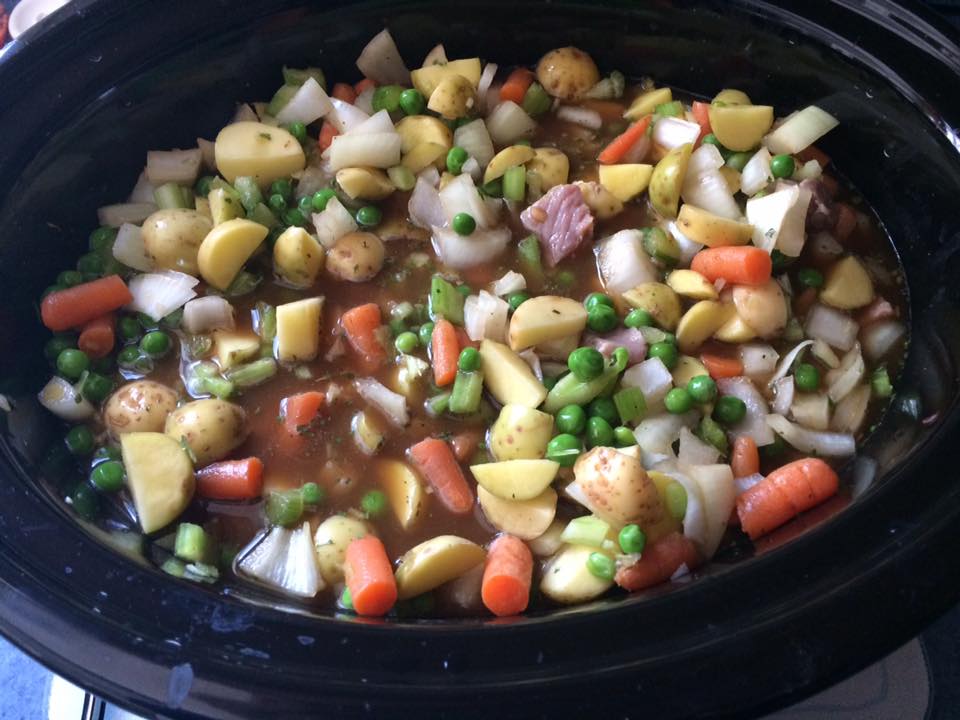
Today we are doing beef stew. PUT DOWN THAT CAN OF DINTY MOORE! I should rename this meal to: Vegetable stew with a little bit of beef, because it really is mostly vegetables. And that is awesome because eating healthy means sneaking in as many vegetables as you can.


This will take some knife skill because you have to cut everything into bite size (or smaller) chunks. Think of the size of your soup spoon - you want everything to be that size of smaller. That is a lot of cutting! Don't worry... you can do it! Just remember your Boy Scout and hunting training: cut away from yourself, slide the knife for a good cut, and rock the blade for an efficient cut. And for God's sake, keep the soft ends of your finger tips away from the blade!


Start with one pound of stew meat. Stew meat is often covered in fat, and you can remove the fat by turning the knife on its side and sliding it across the fat.


Potatoes, celery, carrots - rinse and cut them up.  For the onion, put off the ends and peal off the brown paper outer shell. Then cut it into bite sized pieces (be ready to cry!). Add a bag of frozen peas (no need to cut those unless you are bored). Use some beef broth and stew mix. Cook on low 8 hours or high 4 hours, or whatever combination fits your schedule.


Before serving, mix in some flour to turn the broth into a gravy.

This is going to be a dinner you will want to brag about!


18 month Post-Op Checkup

I had my 18 month post-op checkup with the Endocrinologist on Friday, which is weird because it has been over 19 months. But, hey - close enough! The purpose of me sharing this is because I know people get concerned and wonder what long term care is like after a Thyroidectomy. I'm not one to share personal medical things, but, I'm doing it in this blog because I hope it helps others.

These appointments have become fairly routine. I get some bloodwork done the week before. We review the results and the doctor makes any necessary adjustments. She asks me a bunch of questions, complains about my weight, and does a checkup. She then gets the resident who comes in all smiles and says "You are cured" and I have to remind the resident-of-the-day that you are never cured from Thyroid cancer. We all slap each other on the back, great day, and I leave.

The only medical change this trip was a reduction in the amount of calcium I take. I had lost two parathyroids and so I take a lot of calcium supplements. Due to my history with kidney stones (had one 15 years ago) she cut my supplement intake in half.

Test results:
Thyroglobulin Ab   1.1   Range: 0.0-4.0
Thyroglobulin Qn  <.2    Range 0-55
T4 Free                   1.8    Range .9-1.7     She didn't seem concerned that this was out of range
TSH                         .9     Range .27-4.32
PTH Intact             29.9   Range 15-65

Many people recommend T3 get tested every time. But my doctor will only test T3 if she thinks there is a problem.

My next step is to get a routine ultrasound of the thyroid bed. And then I do not need to return to see the Endocrine doctor for a year!

Friday, March 23, 2018

Where Did I Go?

Click on the video below for an update


Disclaimer: I am not a doctor, nutritionist, nor personal trainer. Never take medical advice over the internet. Seek the advice of your doctor before following any of the recommendations made during this series.